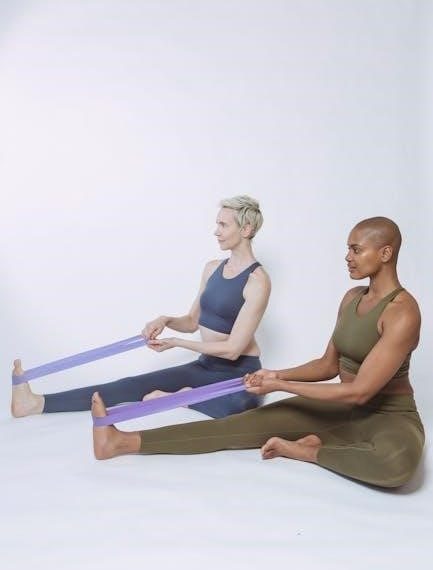
seated resistance band exercises for seniors pdf
Seated Resistance Band Exercises for Seniors: A Comprehensive Guide
Discover a vital routine for seniors, enhancing strength, lowering blood sugar, and promoting independence through accessible, seated exercises, often found in PDF guides.
Seated resistance band training offers a safe and effective way for seniors to maintain and improve their physical fitness. Unlike traditional weightlifting, resistance bands provide variable resistance, accommodating a wider range of strength levels and minimizing stress on joints. Many resources, including comprehensive PDF guides, detail these exercises.
Chair exercises, or seated exercises, are particularly beneficial for older adults who may have balance concerns or limited mobility. These exercises can be performed comfortably from a chair, reducing the risk of falls. A PDF often outlines programs with two resistance bands, handles, and printed exercise guides, ideal for rehab or physical therapy.
These programs frequently include exercises targeting various muscle groups, promoting overall strength, flexibility, and cardiovascular health. Accessing a well-structured PDF ensures proper form and progression, maximizing benefits and minimizing injury risk. It’s a fantastic starting point for a healthier, more active lifestyle.
Benefits of Resistance Band Exercises for Seniors
Resistance band exercises, particularly when performed seated, offer numerous benefits for seniors. They enhance strength and endurance, improving the ability to perform daily tasks with greater ease. Many PDF guides emphasize the role of these exercises in promoting independence and reducing the risk of falls.
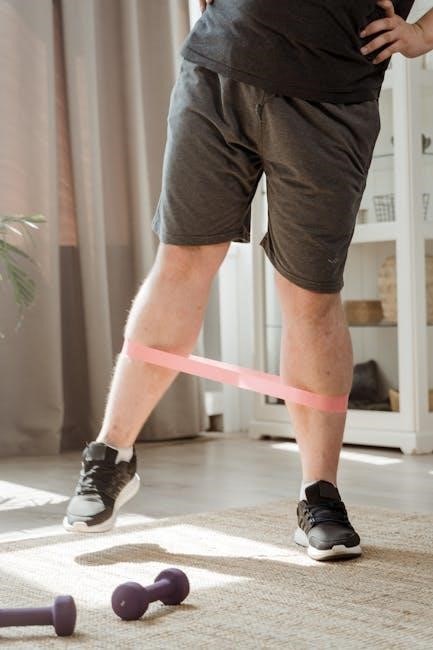
Beyond physical strength, resistance training contributes to improved cardiovascular health and can even assist in lowering blood sugar levels, as highlighted in several resources and PDF workout plans; The variable resistance adapts to individual strength, making it suitable for all fitness levels.
Furthermore, these exercises are low-impact, minimizing stress on joints, and are often recommended during rehabilitation. A detailed PDF can provide a structured program for weight loss, encouraging a healthier lifestyle. Consistent use leads to increased energy levels and an overall improved quality of life for seniors.
Safety Precautions & Considerations
Prior to starting any seated resistance band exercise program, consulting with a healthcare professional is crucial, especially for individuals with pre-existing conditions. A comprehensive PDF guide should always recommend this initial step.
Ensure the resistance band is inspected for any tears or damage before each use. Proper form is paramount; a PDF resource should include clear illustrations and descriptions. Begin with lower resistance levels and gradually increase as strength improves, avoiding overexertion.
Maintain controlled movements throughout each exercise, and avoid jerky or rapid motions. Listen to your body and stop immediately if you experience any pain. Secure the band properly to prevent snapping or slipping, and always perform exercises in a stable chair. Many PDFs highlight the importance of a supportive seating surface.
Choosing the Right Resistance Band
Selecting the appropriate resistance band is vital for a safe and effective workout, often detailed within a comprehensive PDF guide. Bands come in varying resistance levels, typically color-coded – lighter colors indicate lower resistance, while darker colors signify higher resistance.
For seniors new to resistance training, starting with a light or extra-light resistance band is highly recommended. This allows for proper form development without undue strain. A good PDF resource will explain this progression clearly.
Consider the band’s material; latex bands are common but may cause allergies. Latex-free alternatives are readily available. Look for bands with comfortable handles or the ability to be securely gripped. A detailed PDF may offer brand recommendations and purchasing advice, ensuring a comfortable and effective exercise experience.
Understanding Resistance Levels
Resistance levels are crucial for progressive overload, a key principle in strength training, often explained in detail within a PDF guide for seniors. Bands are typically categorized as extra-light, light, medium, heavy, and extra-heavy.
A PDF resource should emphasize starting with a level where you can comfortably perform 10-15 repetitions with good form. If the exercise feels too easy, gradually increase the resistance. Conversely, if you struggle to maintain form, reduce the resistance.
It’s important to remember that resistance isn’t solely about strength; it’s about challenging your muscles. A well-structured PDF will illustrate how to adjust resistance based on individual fitness levels and exercise types. Listen to your body and prioritize proper technique over lifting heavier resistance.
Upper Body Exercises
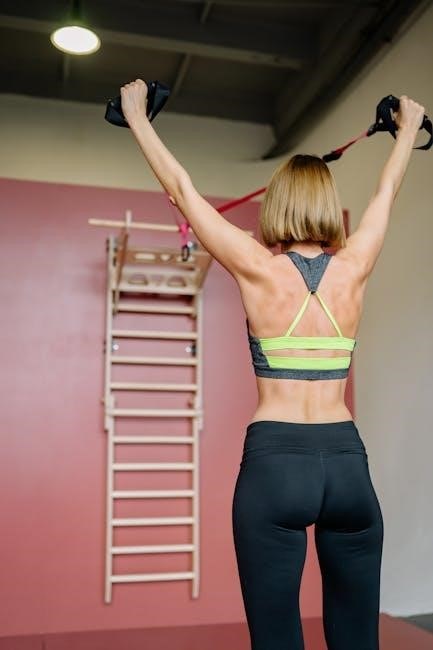
Explore seated bicep curls, tricep extensions, shoulder rows, chest presses, and lateral raises – commonly detailed with illustrations in senior-focused PDF guides.
Seated Bicep Curls
Seated bicep curls are a fantastic exercise for strengthening the front of your upper arms, readily explained within PDF guides for senior fitness. To perform this exercise, sit comfortably in a chair with your feet flat on the floor. Secure the resistance band under your feet, holding an end in each hand with palms facing upwards.

Keep your elbows close to your body and slowly curl the band upwards towards your shoulders, squeezing your biceps at the top of the movement. Lower the band back down with control. Many PDF resources emphasize starting with a lighter resistance band and gradually increasing it as your strength improves.
Focus on maintaining good posture throughout the exercise, avoiding swinging your body or using momentum. Aim for 10-15 repetitions per set, completing 2-3 sets with a brief rest between each. These guides often include visual demonstrations for proper form.
Seated Tricep Extensions
Seated tricep extensions effectively target the back of your upper arms, often detailed in PDF guides designed for senior exercise programs. Begin by sitting in a chair with good posture, feet firmly planted. Secure one end of the resistance band under your seat. Hold the other end with both hands, extending your arms overhead.
Keeping your upper arms stationary, bend your elbows to lower the band behind your head, feeling a stretch in your triceps. Then, straighten your arms back to the starting position, squeezing your triceps at the top. PDF resources frequently suggest using a band with moderate resistance initially.
Maintain a controlled movement throughout, avoiding any jerky motions. Aim for 10-15 repetitions for 2-3 sets, with short rests in between. Many guides emphasize the importance of keeping your back straight and core engaged during the exercise for optimal results and safety.
Seated Shoulder Rows
Seated shoulder rows, frequently illustrated in PDF exercise guides for seniors, strengthen the upper back and improve posture. Sit comfortably in a chair with your back straight and feet flat on the floor. Secure the resistance band around a stable object in front of you, or hold it with both feet shoulder-width apart.
Grasp the ends of the band with your palms facing each other. Keeping your back straight and core engaged, pull the band towards your chest, squeezing your shoulder blades together. PDF resources often recommend starting with a lighter resistance band.
Slowly return to the starting position, maintaining control throughout the movement. Repeat for 10-15 repetitions for 2-3 sets. Proper form, as detailed in many PDFs, is crucial – avoid shrugging your shoulders or using momentum to pull the band.
Seated Chest Press
Seated chest press exercises, commonly found within PDF guides for senior resistance band training, effectively work the chest muscles while providing a safe, supported position. Secure the resistance band around your back, positioning it under your armpits. Ensure the band isn’t too tight initially; PDFs emphasize gradual progression.
Holding the band ends in each hand, bend your elbows at a 90-degree angle, keeping your back straight and core engaged. Push your arms forward, extending them until they are almost straight, mimicking a chest press motion. Many PDFs include visual demonstrations.
Slowly return to the starting position, controlling the band’s resistance. Perform 10-15 repetitions for 2-3 sets. PDF resources often advise focusing on controlled movements and avoiding locking the elbows to prevent injury.
Seated Lateral Raises
Seated lateral raises, detailed in many PDF guides for senior resistance band workouts, target the shoulder muscles, improving upper body strength and range of motion. Sit upright with your back supported, and place the resistance band under your feet, holding an end in each hand. PDFs often stress proper form.
Keep a slight bend in your elbows and raise your arms out to the sides, maintaining a controlled motion until your arms are shoulder-height. Avoid shrugging your shoulders; focus on isolating the lateral deltoids. Many PDFs include illustrations.
Slowly lower your arms back to the starting position, resisting the band’s pull. Aim for 10-15 repetitions for 2-3 sets. PDF resources frequently recommend starting with a lighter resistance band and gradually increasing it as strength improves.
Lower Body Exercises
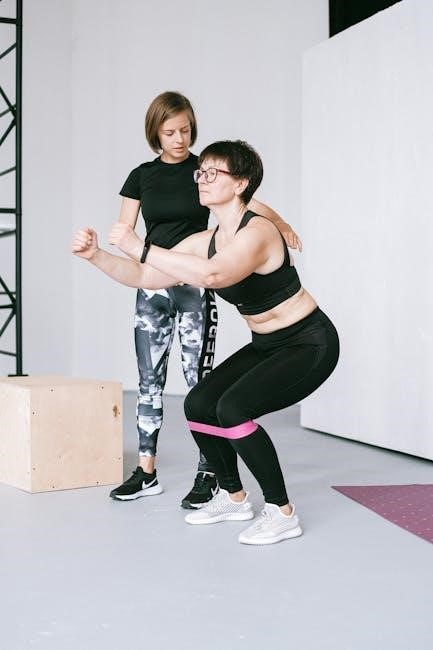
PDF guides showcase seated leg extensions, hamstring curls, hip abduction, and calf raises, building lower body strength and stability for seniors safely.
Seated Leg Extensions
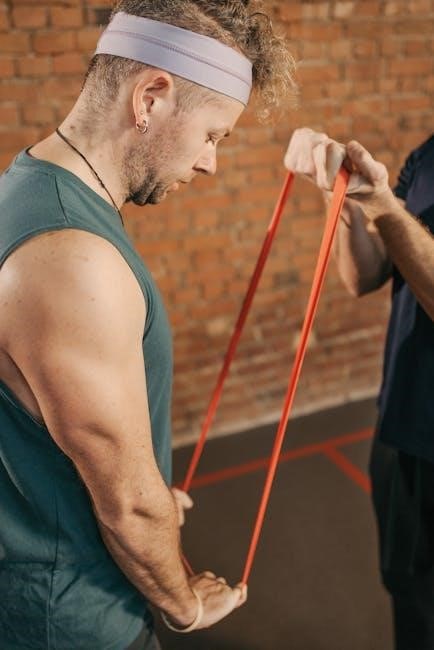
Seated leg extensions with a resistance band are excellent for strengthening quadriceps, crucial for mobility in seniors. Many PDF exercise guides detail proper form: securely anchor the band under your feet or chair legs. Loop the other end around your ankles.
Sitting upright with good posture, slowly extend one leg against the band’s resistance, keeping your core engaged. Avoid locking your knee at the top of the movement. Slowly return to the starting position, controlling the band’s pull.
Repeat for 10-15 repetitions on each leg. PDF resources often suggest starting with a lighter resistance band and gradually increasing it as strength improves. This exercise enhances knee stability and supports daily activities like standing and walking. Remember to consult a healthcare professional before starting any new exercise program, especially if you have pre-existing knee conditions.
Seated Hamstring Curls
Seated hamstring curls, utilizing a resistance band, effectively target the back of the thighs, improving leg strength and flexibility for seniors. PDF guides frequently illustrate anchoring the band to a stable chair leg or a similar fixed point. Loop the other end around one ankle.
Maintaining an upright posture, slowly bend your knee, bringing your heel towards your glutes against the band’s resistance. Focus on squeezing your hamstring muscles during the curl. Control the movement as you slowly return your leg to the starting position.
Aim for 10-15 repetitions per leg. Many PDF resources recommend selecting a band that provides moderate resistance, allowing for controlled movements. This exercise aids in improving balance and reducing the risk of falls. As always, consult your doctor before beginning any new exercise routine, particularly if you have existing hamstring or back issues.
Seated Hip Abduction
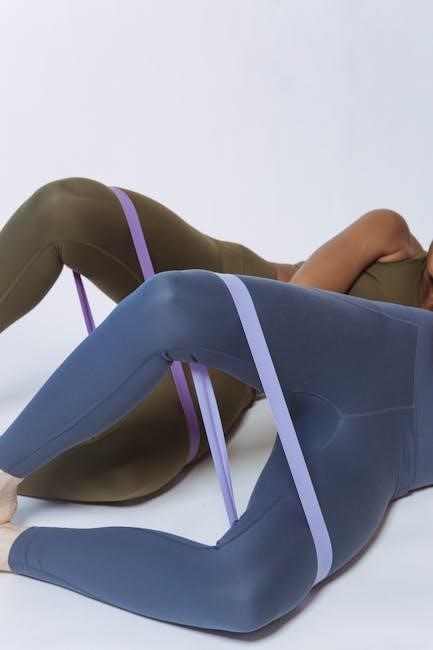
Seated hip abduction, a valuable exercise detailed in many senior-focused resistance band PDF guides, strengthens the muscles on the outer hips and thighs. Begin by securing a resistance band around both ankles. Ensure the band has slight tension even at the starting position.

Sitting upright with good posture, slowly move one leg outwards, away from the midline of your body, against the band’s resistance. Keep your knee straight and your foot flexed. Focus on engaging the outer hip muscles throughout the movement.
Hold briefly at the peak of the abduction, then slowly return your leg to the starting position, maintaining control. Repeat 10-15 times on each leg. PDF resources often suggest starting with a lighter band and gradually increasing resistance as strength improves. This exercise enhances stability and can aid in preventing falls.
Seated Calf Raises
Seated calf raises, frequently illustrated in seated resistance band exercise PDFs for seniors, effectively target the calf muscles. Position a resistance band around the balls of your feet, holding the ends securely in your hands. Sit upright in a chair with your feet flat on the floor.
Keeping your thighs stationary, slowly raise your heels off the floor, pressing against the resistance of the band. Focus on contracting your calf muscles during this upward phase. Maintain a controlled movement, avoiding any jerky motions.
Hold the contracted position briefly, then slowly lower your heels back to the starting position. Repeat this exercise for 10-15 repetitions. Many PDF guides recommend adjusting band tension to suit individual strength levels. Strengthening calves improves ankle stability and supports overall lower body function.
Full Body & Core Exercises
PDF guides detail seated twists and marching exercises utilizing resistance bands, enhancing core strength and overall fitness for seniors with limited mobility.
Seated Russian Twists with Resistance Band

Seated Russian twists, detailed in many senior-focused resistance band exercise PDFs, are excellent for core strengthening and improving rotational mobility. Begin seated with knees bent and feet slightly elevated, or firmly planted for stability. Secure a resistance band around your feet or anchor it to a stable object.
Holding the band with both hands, lean back slightly, maintaining a straight spine. Rotate your torso from side to side, bringing the band across your body. Focus on engaging your abdominal muscles throughout the movement.
PDF guides often recommend starting with a lighter resistance band and gradually increasing it as strength improves. Perform 10-15 repetitions on each side, ensuring controlled movements to avoid strain. This exercise enhances balance and coordination, crucial for seniors, and is frequently included in rehabilitation programs.
Seated Marching with Resistance Band
Seated marching with a resistance band, commonly illustrated in senior exercise PDFs, is a fantastic low-impact cardio and lower body strengthening exercise. Secure a resistance band around your thighs, just above the knees. Sit upright in a chair with your feet flat on the floor.
Lift one knee towards your chest, as if marching, while maintaining good posture and engaging your core. Slowly lower your foot back down and repeat with the other leg. The resistance band adds intensity, working your hip flexors, glutes, and thighs.
Many PDFs suggest starting with 10-15 repetitions per leg, gradually increasing the duration or resistance as you get stronger. This exercise improves circulation, boosts energy levels, and is often recommended during physical therapy or rehabilitation programs for seniors seeking improved mobility.
Cool-Down & Stretching
Concluding your seated resistance band workout with a cool-down and stretching is crucial, often detailed in comprehensive senior exercise PDFs. Begin with 5-10 minutes of slow, deep breathing to gradually lower your heart rate. Gentle stretching improves flexibility and reduces muscle soreness.
Focus on major muscle groups worked during the exercises – biceps, triceps, shoulders, legs, and core. Hold each stretch for 20-30 seconds, avoiding any bouncing or jerky movements. Examples include seated hamstring stretches, shoulder stretches, and gentle torso twists.
Many PDFs emphasize the importance of listening to your body and stopping if you feel any pain. Proper cool-down and stretching enhance recovery, prevent injuries, and maintain range of motion, contributing to long-term fitness benefits for seniors.